
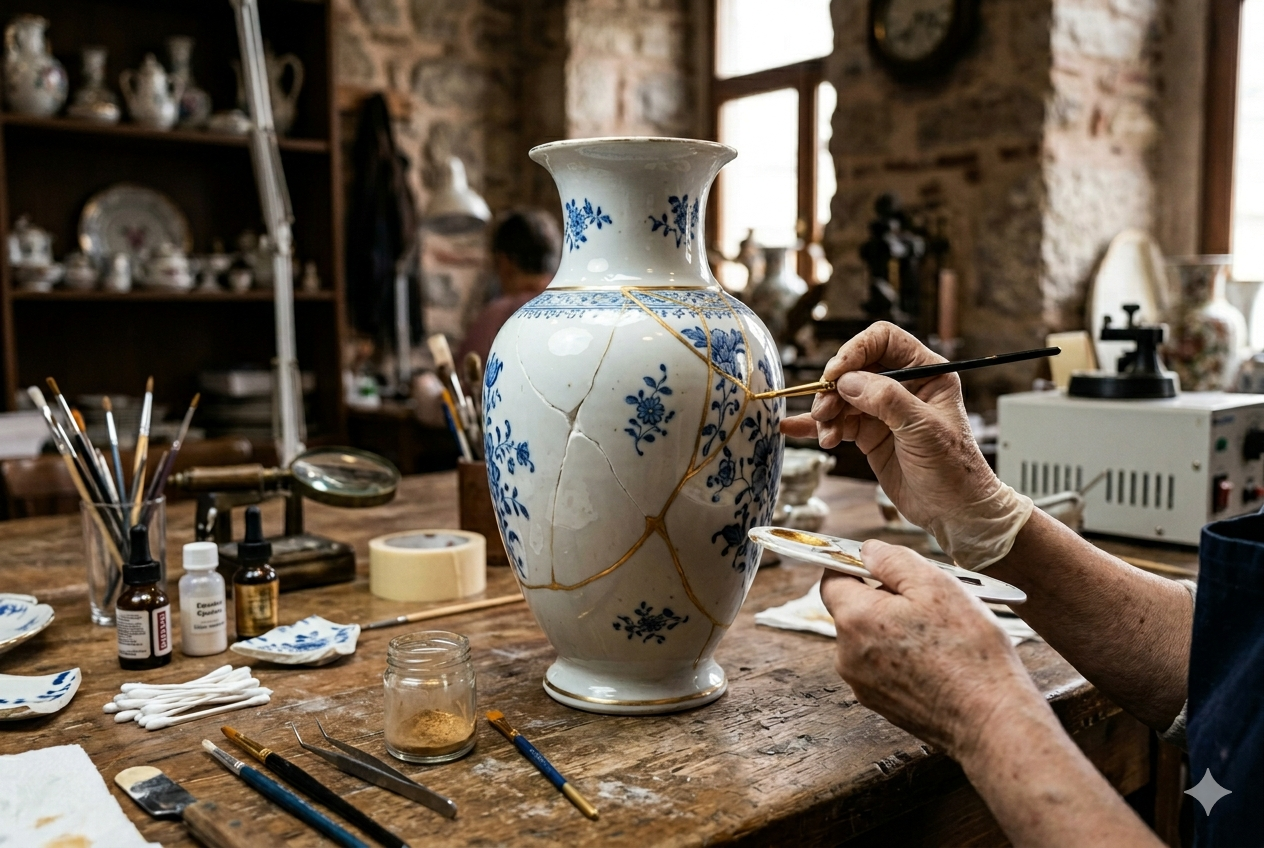
The Golden Rule in Porcelain Repair: Staying True to its Original Texture
Porcelain has been a highly significant material, both aesthetically and functionally, throughout history. With its elegant yet durable structure, porcelain products have a wide range of uses in daily life. However, over time, they can wear out, break, or be damaged by various external factors. Porcelain repair is a process that requires significant expertise to prevent such damage and restore the item to its original state. One of the most crucial elements for successful porcelain repair is "staying true to the original texture." This article will thoroughly examine the importance of preserving the original texture in porcelain repair, how this principle is applied, and its critical role in maintaining the value of porcelain.
1. Characteristics and Importance of Porcelain
Porcelain holds a special place among ceramic materials. The minerals used in its production, such as kaolin, feldspar, and quartz, enable porcelain to acquire both transparency and durability. Unlike other ceramic products, porcelain is fired at high temperatures, a process that increases the material's hardness. These unique properties of porcelain make it valuable both aesthetically and functionally. For this reason, porcelain items, especially antique pieces or valuable collectibles, are highly prized.
However, porcelain's fragility means that when damaged, its original form can be lost. The repair of a damaged porcelain item must be carried out correctly, not only aesthetically but also functionally. Adhering as closely as possible to the original structure of the repaired porcelain preserves both its aesthetic integrity and its historical value.
2. The Importance of Adhering to the Original Texture
In porcelain repair, adhering to the original texture is critically important for both aesthetic and functional reasons. There are several reasons for applying this rule:
a) Aesthetic Integrity
Porcelain products typically stand out due to their visual aesthetics. Paint patterns, color tones, and surface texture constitute the unique identity of porcelain. Adhering to the original texture ensures the preservation of this aesthetic integrity. The materials used in the repair of damaged porcelain must be compatible with the old surface texture. Otherwise, the repaired area will have a distinctly different texture, which diminishes the aesthetic value of the item.
b) Loss of Value
Porcelain carries historical and cultural value. Antique porcelains, in particular, are priceless for collectors. If a porcelain item is repaired using incorrect techniques or materials, it can lead to significant losses, not only in aesthetics but also in value. When the original texture is not adhered to, there is a risk of losing the historical and cultural value of the porcelain. Repairs performed using the correct materials and techniques ensure the preservation of the item's original value.
c) Functional Integrity
Porcelain is not merely an aesthetic object but also a functional product. For instance, porcelain dinnerware is used for serving beverages or as decorative items. Preserving this functional role depends on the accuracy of the repair. Adhering to the original texture not only ensures visual integrity but also guarantees that the item remains suitable for its intended use.
3. Methods and Techniques Used in Porcelain Repair
In porcelain repair, the selection of appropriate materials and the use of suitable techniques are of vital importance. Here are the most frequently employed methods in porcelain repair:
a) Epoxy and Ceramic Adhesives
When joining broken or cracked porcelain pieces, high-strength epoxy adhesives are preferred. These adhesives provide a strong bond at the broken points of the porcelain and also offer transparency. Epoxy allows for the safe repair of porcelain without compromising its original texture.
b) Texture Restoration and Painting
When patterns or colors on the porcelain surface are damaged, these areas are carefully painted. However, the most important consideration here is that the paints and painting techniques used must be compatible with the original pattern. The surface texture should be recreated to match that of the original porcelain. Special porcelain paints and brushes are used for this purpose.
c) Firing and Baking
In some cases, repaired porcelain items may need to be refired. This process ensures that the paints become permanent, especially after painting. Additionally, firing is necessary for the repaired parts of the porcelain surface to regain their original hardness.
d) Texture Replication
The texture of porcelain is typically created through craftsmanship, and each piece is unique. Therefore, it is crucial to replicate the original texture as accurately as possible during the repair process. The texture of porcelain can be recreated using special molds or handmade techniques.
4. Challenges Encountered in Porcelain Repair
Porcelain repair is a complex and meticulous process. Each porcelain piece can have different characteristics, and thus, each repair process is unique. In this context, some of the challenges encountered include:
a) Texture Matching
Achieving texture consistency in porcelain can be quite challenging, as the surface of porcelain is generally smooth and has a very fine structure. Recreating this texture requires great skill and experience. Furthermore, different types of porcelain (e.g., white porcelain and colored porcelain) may have different textural properties, which further complicates the repair process.
b) Color Matching
The color of porcelain can change over time, and this change can be particularly noticeable in antique porcelains. During the painting process, the original color tones must be precisely matched. The painting process must be carried out carefully, considering not only color but also light reflection and gloss.
c) Time and Patience
Porcelain repair is a time-consuming and patience-demanding process. Each stage must be carefully planned, and the procedure must be applied correctly. Hasty actions can lead to the failure of the item's repair.
5. Conclusion
Porcelain repair is an art that requires attention and expertise. Adhering to the original texture is an important principle not only aesthetically but also functionally and in terms of value. During porcelain repair, the use of correct materials and ensuring texture and color compatibility play a critical role in restoring the item to its original state. In this way, porcelain pieces, which are significant both aesthetically and historically, can retain their value and be used for many years.
The principle of staying true to the original texture not only preserves the history and cultural value of porcelain but also ensures its continuity for the future. Therefore, while porcelain repair is a process requiring expertise, it can achieve success with the right techniques and materials.